> ## Documentation Index
> Fetch the complete documentation index at: https://docs.hylo.so/llms.txt
> Use this file to discover all available pages before exploring further.
# Protocol Revenue
> Understanding Hylo's revenue streams from fees and LST yield
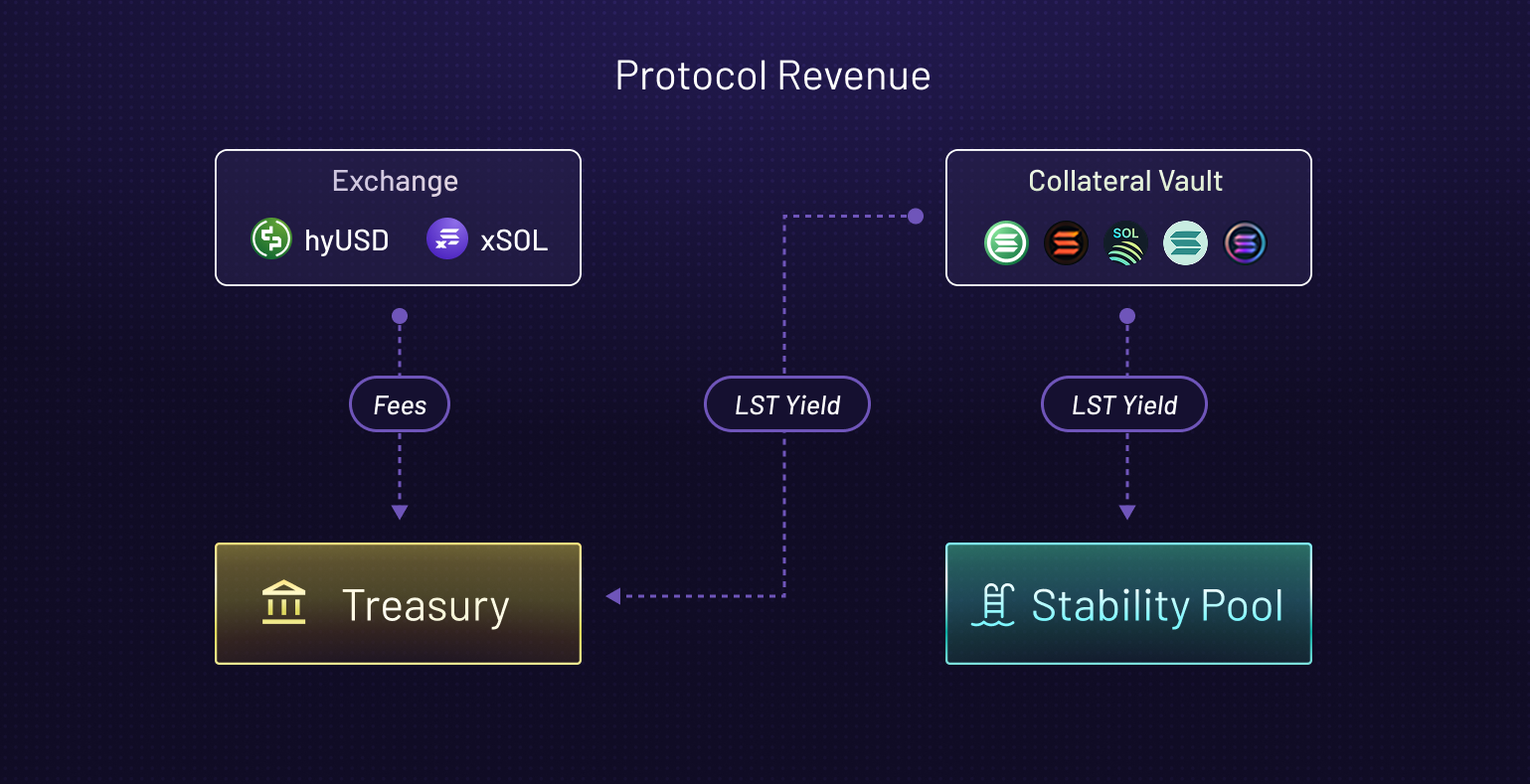
Hylo is designed to generate revenue through two main channels: **mint/redeem fees** and **LST yield produced by the collateral pool**.
 ## LST Yield
The LSTs held in collateral pool are projected to yield a base APY between 8-11%. A large majority of this yield is allocated to those participating in the stability pool, with the remainder serving as a direct source of revenue for Hylo's treasury.
## Mint/Redeem Fees
Minting and redemption fees are the protocol's primary revenue stream. All trading transactions incur a fee on the order of basis points, with fees varying depending on health of the protocol. See [Risk Management](/protocol-overview/risk-management) for an overview of the fee structure.
As hyUSD gains distribution as a quoted asset for token pricing, the fee revenue stream may become more important than staking yield. Increased usage will create more arbitrage opportunities, leading to higher minting and redeeming volumes.
## LST Yield
The LSTs held in collateral pool are projected to yield a base APY between 8-11%. A large majority of this yield is allocated to those participating in the stability pool, with the remainder serving as a direct source of revenue for Hylo's treasury.
## Mint/Redeem Fees
Minting and redemption fees are the protocol's primary revenue stream. All trading transactions incur a fee on the order of basis points, with fees varying depending on health of the protocol. See [Risk Management](/protocol-overview/risk-management) for an overview of the fee structure.
As hyUSD gains distribution as a quoted asset for token pricing, the fee revenue stream may become more important than staking yield. Increased usage will create more arbitrage opportunities, leading to higher minting and redeeming volumes.